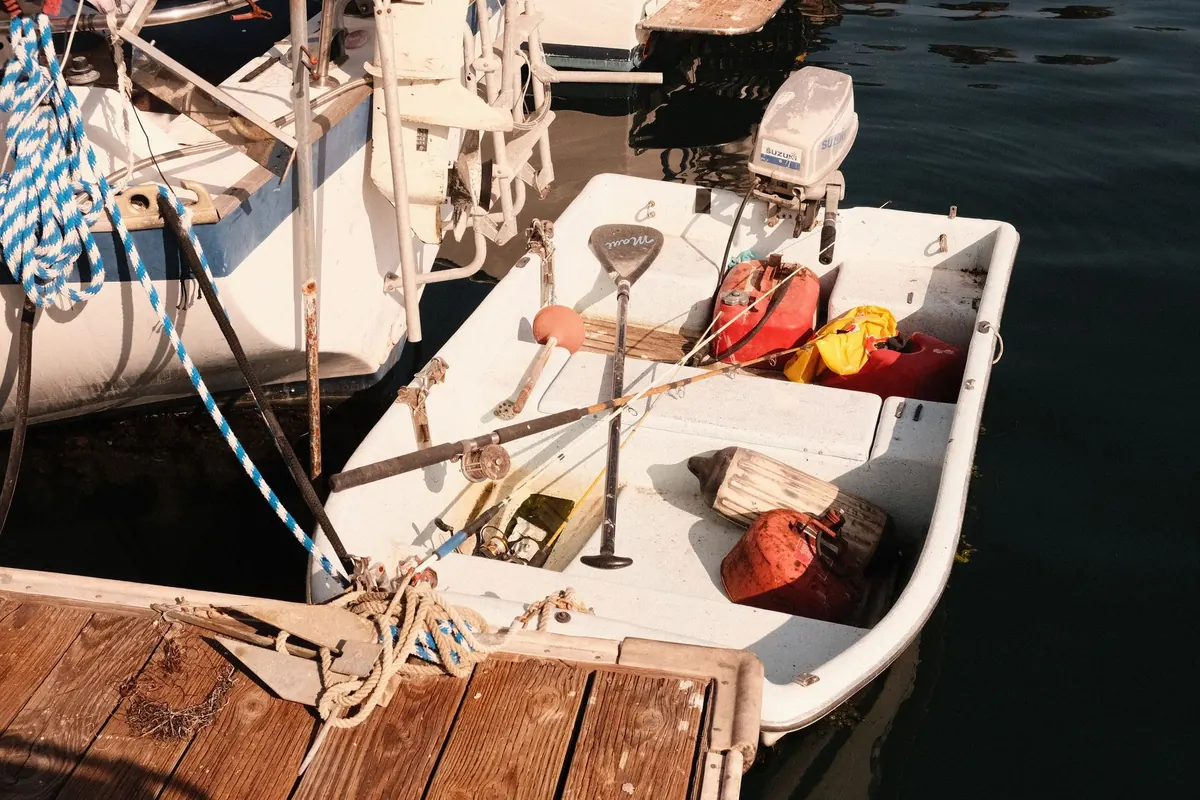
Seven days of warm-weather coastal cruising sounds like a light load — until you picture the squall on day two, the cool evening at anchor, the dinner ashore, and a berth roughly the size of a surfboard. The duffel is what makes the decision easy: if it doesn't fit, it stays home. This list is built for a week of day hops and overnight anchorages in warm water. It covers the layers that dry by morning, the wet gear you hope not to use, the paperwork that gets you through a marina office, and the small remedies that keep a good trip from turning sour.
Soft-sided is non-negotiable. A hard case will not slide under a berth or into a cockpit locker, and you will spend the week stepping over it. A 55–70 litre duffel with backpack straps is the sweet spot: big enough for a week, small enough to carry down a dock with one hand free for a line.
Inside, use two or three packing cubes and a 20-litre dry bag for shore trips. Add a small roll-top pouch for phone, wallet and keys. Then ask the skipper three questions before you pack anything: are linens and towels provided, is there laundry within walking distance, and how much fresh water does the boat carry? Bring a quick-dry travel towel regardless — it weighs almost nothing and always gets used.
Cotton soaks, sags and chills you the moment the wind picks up. Merino and synthetics rinse in the sink and dry on a guard wire overnight. Think in thin layers rather than one warm jacket, so you can add and shed through a day that starts at 26°C and ends in a 15-knot breeze.
Midweek, drop the day's shirts and underwear into the dry bag with a capful of detergent and a litre of water, knead it for a few minutes, rinse, and hang everything on the guard wires. You finish the week with clean clothes and no laundry bill.
Warm-water sailing still means rain, and a squall at 2 a.m. is cold in a wet T-shirt. Bring a jacket with a hood generous enough to sit over a hat, and chest-high trousers with a bib. If you are sailing overnight or outside the summer window, keep them out of the duffel and in a locker where you can reach them in ten seconds. Rubber boots take up real space; if you leave them at home, pack neoprene socks instead and accept damp feet.
Deck shoes with non-marking soles and grip that holds on wet gelcoat. Sandals with heel straps for the dinghy and the shore. Flip-flops come off in the surf and will not hold a wet ramp. Add sailing gloves, polarized sunglasses with a retaining strap, a spare pair of prescription glasses if you wear them, and a headlamp with a red setting so you don't blind the watch.
Keep all of it in one small waterproof pouch that lives in the same pocket every day. Before you leave, read your travel insurance policy for what it says about sailing and about medical cover abroad; if the wording is unclear, ask the insurer directly rather than assuming. Check destination health requirements with a travel clinic well ahead of departure.
Seasickness is easiest to manage before it starts. If you know you are prone, speak to a pharmacist or doctor several weeks out about the options — some remedies are prescription-only in many countries, and what suits one sailor can flatten another. Test anything new at home, never on the first morning of the charter.
Onboard, the old advice holds. Stay on deck, keep your eyes on the horizon, take the helm if you can, and stay away from the cabin, the head and engine fumes. Eat something plain before you leave the dock, sip water steadily, and skip the heavy drinking the night before. Ginger helps some people; acupressure bands help others.
If you have a medical condition or take prescription medication, get personalised advice from a doctor or pharmacist rather than copying someone else's kit.
A power bank with two charging cables, one of which always lives in the dry pouch. A 12-volt USB adapter, because your cabin may have no mains socket. A water bottle you can clip to a lifeline, earplugs and a sleep mask for anchor chain, engine and the crewmate who snores, and a small notebook for the log. Add a couple of carabiners, a short length of cord for drying laundry, and a strip of sail repair tape.
Lay everything on the bed, then take one shirt out. Weigh the duffel — airlines care, and your back will by day three. Put documents, medication and a spare T-shirt in the top pocket where you can reach them without unpacking. Confirm the meeting time and place, and leave a copy of your float plan with someone at home.
Then ask the only question that matters on the dock: can I carry this in one hand, in the dark, while holding a line in the other? If the answer is yes, you are packed. If it isn't, take out the second towel and try again.
Photo: Jake Ryan / Pexels

A practical checklist for cross-border coastal cruising: the documents to carry, the safety gear officials ask...

Winter liveaboard life in Atlantic harbours rewards planning: read the marina contract, judge how the berth faces...
A practical guide to picking up a mooring buoy under power or sail, with approach plans, line handling, and safety...


Navigate the world's harbours with confidence..
