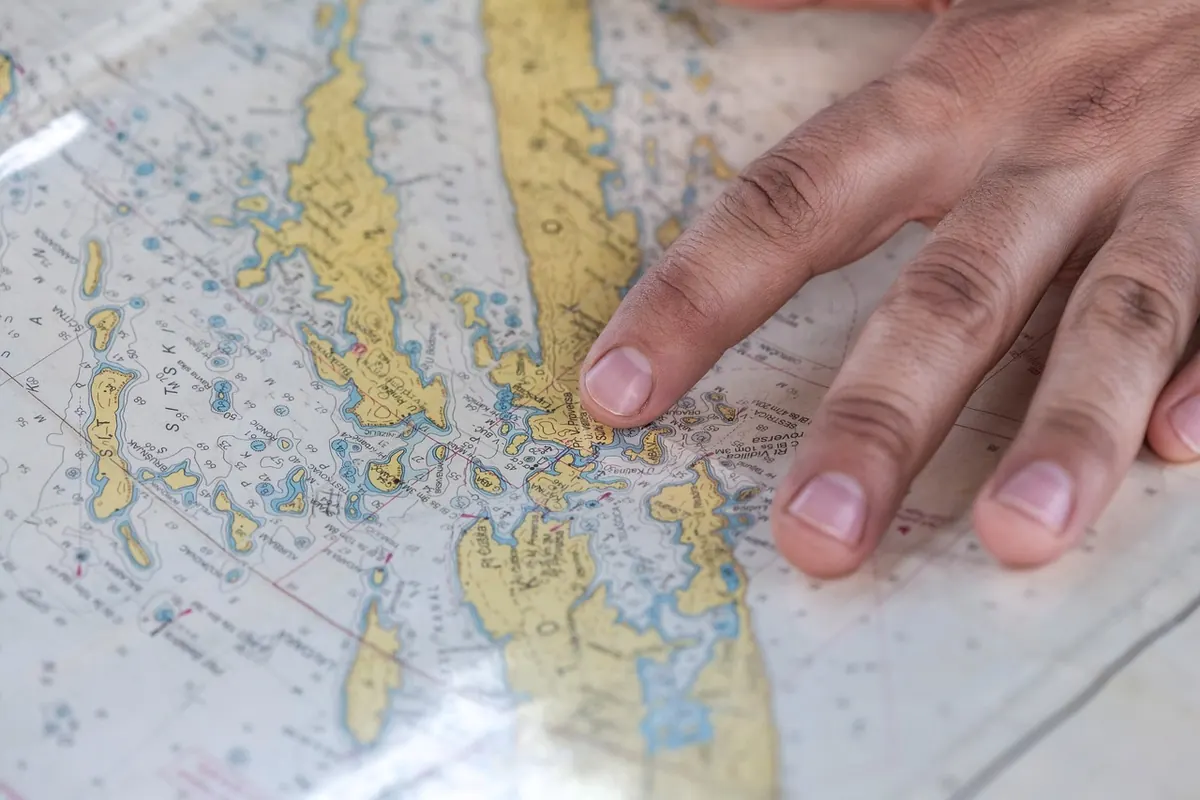
Two coastal towns, one day, and a stretch of water between them. That's one of the purest forms of sailing: a passage with a purpose, a lunch hook, and a berth waiting at the other end. But a day sail between ports is not just a matter of pointing the bow and going. The difference between a relaxed six-hour run and a stressful beat into a rising sea often comes down to the planning you do the night before. Here's how to stack the odds in your favour.
Start with the chart, not the forecast. Pick two towns that are genuinely reachable in daylight, then measure the direct distance and add a realistic margin. A 20-nautical-mile straight line can easily become 28 miles once you account for tacking, tidal offsets, and the dogleg around a headland. For a first attempt, look for a route with no more than one major headland, a clear entrance, and at least one alternative harbour in between.
Identify the bail-out ports. If the wind pipes up or the crew tires, where can you tuck in? A fishing harbour with a rising tide, a marina with visitor berths, or even a sheltered anchorage can turn a bad afternoon into a sensible one. Mark these on the chart and note their entrance characteristics: depth, sill, bar, or bridge.
Tides do two things on a coastal passage: they change the depth under your keel, and they push you sideways. Both matter, but for different parts of the day. Get the tide tables for both towns and write out the times of high and low water. Then look at the tidal stream atlas or a reliable pilot book for the direction and rate of the current along your route.
A fair tide can add a knot or more to your speed over ground. A foul tide can take it away. On a 20-mile leg, that difference can be over an hour. If you can, plan to sail with the stream for the longest stretch, even if it means leaving earlier than you'd like. The classic mistake is to leave at a civilised hour and spend the afternoon punching into a tide that turns against you at the worst moment.
When the wind blows opposite to a strong tidal stream, the sea stands up quickly. Short, steep waves can slow a small boat and make harbour entrances uncomfortable. If the forecast is for wind against tide at a headland or river mouth, either adjust your timing or choose a route that stays in sheltered water.
Wind is the engine, so treat the forecast as a series of windows rather than a single number. Look at the hourly picture: direction, speed, and gusts. A day that starts with 8 knots from the west and builds to 18 by mid-afternoon is very different from a steady 12 knots all day. For a day sail, the sweet spot is usually a beam or broad reach in 8 to 15 knots, with the option to reef if it freshens.
Check the sea breeze. In summer, coastal towns often develop a local afternoon breeze that can be stronger than the gradient wind. It can give you a pleasant lift home, or it can turn a gentle run into a wet beat. Local sailing guides and harbour notices will tell you the pattern, but the first sign is often a line of darker water and a sudden change in wind direction near the shore.
Arriving is not the same as leaving. Many coastal towns have restricted entrances: a sill that dries at low water, a bar that breaks in an onshore swell, or a bridge that opens only at certain states of the tide. Check the harbour's published approach notes and, if in doubt, call the harbour office on VHF before you commit. They would rather answer a polite question than attend a grounding.
Aim to enter with the tide rising if possible. That gives you more depth under the keel and a softer place to land if something goes wrong. If the entrance is busy, wait outside the harbour limit and let the ferries and fishing boats go first. Have your fenders and lines ready before you reach the mouth, not while you're drifting in a narrow channel.
Write it down. A plan on paper is easier to share with crew and quicker to adjust than one held in your head. Use this sequence:
Add the practical basics: fuel, water, food, sun cream, warm layers, and a charged handheld VHF. Tell someone ashore where you're going and when you expect to arrive. That single call is the most valuable safety step of the day.
A day sail between two towns often means the return is not a simple mirror image. The wind may have shifted, the tide may be running the other way, and the crew may be tired. Consider your options in advance:
If you do sail back, treat it as a second passage. Recheck the tide, the wind, and the harbour entrance for the new time. Fatigue and fading light are the two things that turn a simple return into a long day.
The best day sails have a clear intention and a soft edge. You know where you want to be, but you're willing to change course if the wind shifts or the tide runs late. A good rule is to decide your final destination by the halfway point. If you're making good speed and the weather is kind, carry on. If you're not, turn for the nearer harbour without regret. The point is not to complete the route at all costs. The point is to spend a day on the water, arrive safely, and want to do it again.
Photo: milivigerova / Pixabay

A practical checklist for cross-border coastal cruising: the documents to carry, the safety gear officials ask...
Winter liveaboard life in Atlantic harbours rewards planning: read the marina contract, judge how the berth faces...
A practical guide to picking up a mooring buoy under power or sail, with approach plans, line handling, and safety...


Navigate the world's harbours with confidence..
