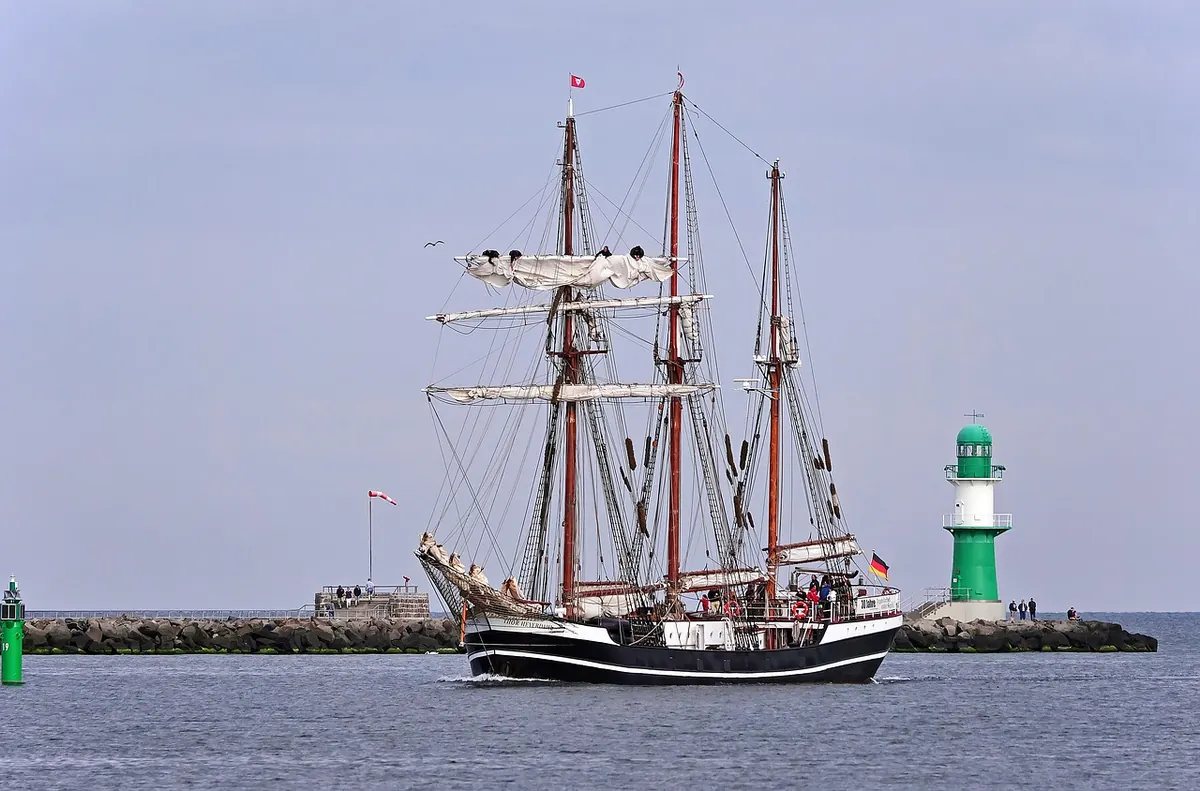
Summer in the Baltic arrives late and then refuses to leave. By late June there is enough light at ten in the evening to read a chart in the cockpit, and along the northern coasts it barely goes dark at all. For a short cruise that is a gift: you can leave after breakfast, cover forty miles, swim, eat ashore and still be tied up before the evening breeze dies.
The ten harbour towns below are spread across five stretches of coast, so most sailors will pick two or three of them for a single trip rather than trying to link all ten. Distances are approximate passage lengths, and routing, wind and the occasional shoal will adjust them. Harbour fees, bridge times and opening hours change from season to season, so check the current harbour guide or call ahead on VHF before you commit to a late arrival.
At the head of a long sheltered fjord on the Danish border, Flensburg makes a sensible first or last stop. The guest harbour is within walking distance of the old town, and a chandlery, bakery and supermarket sit close by. The fjord narrows on the way in and carries ferries alongside a lot of local traffic, so keep a sharp lookout. About 45 nautical miles from Kiel.
Bornholm lies alone in the middle of the Baltic, which is exactly why arriving feels like an achievement. Rønne has a guest pontoon with fuel, water and showers, and the town is small enough to walk in an afternoon. The island's round churches and smoked herring justify the detour. Roughly 180 nautical miles from Flensburg, so treat it as an overnight passage.
About 70 nautical miles east of Kiel, Warnemünde is both a beach resort and the mouth of a working river. Guest berths lie up the Alter Strom, the narrow channel through the old town, where bridge opening times shape your arrival. Ferries and cruise ships use the main channel. Cross it promptly, keep clear, and listen on VHF.
A full day's sail further east, past the low Darss coast and the shoals around Hiddensee. Stralsund's harbour sits in the middle of a UNESCO-listed old town, with the Ozeaneum and the brick churches a short walk away. Rügen shelters the approach, but the charted shallows beside the fairway deserve respect, especially in a fresh westerly.
From Stralsund it is about 190 nautical miles, so break the passage at Świnoujście or Kołobrzeg if you prefer daylight arrivals. Gdańsk's marina sits within walking distance of the rebuilt old town and its crane-lined waterfront. The approach up the Martwa Wisła is commercial water: speed limits apply, shipping traffic is constant, and a VHF call ahead is worthwhile.
About 115 nautical miles on, Klaipėda is Lithuania's main port and a busy one, with ferries and cargo ships sharing the channel. The yacht harbour lies near the old castle, and the Curonian Spit — a long ridge of sand and pine — is a short hop across the lagoon. Follow the designated channels and keep an ear on VTS.
Fifty nautical miles north of Klaipėda. Liepāja's yacht harbour sits on a canal behind a lifting bridge, which gives it an unexpectedly inland feel. The beach is wide and walkable, and the Karosta naval quarter to the north is a strange, sobering place to cycle through. Fuel, water and showers are available in the harbour.
Roughly 115 nautical miles across open water from Liepāja, Visby is the reward: a walled Hanseatic town of roses and ruined churches, with the guest harbour tucked below the cliffs. It fills fast in July, and Medieval Week in August takes what is left, so arrive early in the day or book ahead.
About 150 nautical miles north from Visby, or a gentler run through the Swedish archipelago if you have the time. Mariehamn is the capital of Åland and home to the four-masted barque Pommern, now a museum ship. There are guest harbours on both sides of town, saunas within walking distance and a strong local sailing culture.
Ninety nautical miles east, at Finland's southern tip. Hanko has a long sandy beach, a guest harbour with a proper sauna, and an archipelago behind it that could absorb a whole week of wandering. The water is colder here and the light lasts longer — in June, effectively all night.
The Baltic is shallow, and that shapes everything. Short, steep waves build quickly, and conditions that look gentle on a forecast can turn lively in an hour.
One legal point worth knowing: the Baltic is a designated special area for sewage under MARPOL, and pump-out stations are common in guest harbours. Rules and enforcement differ between countries, so check the current local requirements before discharging anything over the side.
Short Baltic trips work best when you plan less than you think you should. Pick a stretch of coast, accept that weather will rewrite one or two days, and leave the rest to the harbour noticeboards.
Pack layers, a good anchor and more patience than ambition. A Baltic summer rewards the crew that leaves the harbour when the wind suits and spends the long evening ashore instead of pushing on. That, more than miles covered, is what people remember about these coasts.
Photo: hpgruesen / Pixabay
A practical checklist for cross-border coastal cruising: the documents to carry, the safety gear officials ask...
Winter liveaboard life in Atlantic harbours rewards planning: read the marina contract, judge how the berth faces...
A practical guide to picking up a mooring buoy under power or sail, with approach plans, line handling, and safety...

Navigate the world's harbours with confidence..
